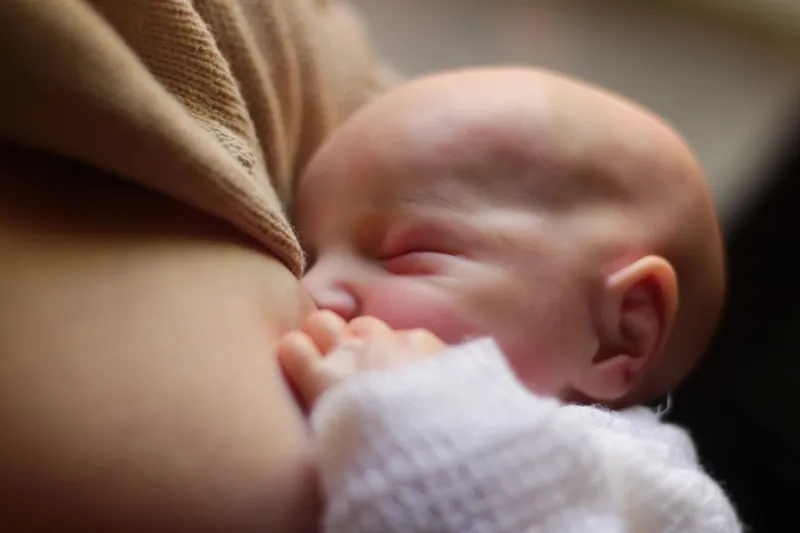
After the Last Feed: Rebuilding Yourself When Breastfeeding No Longer Defines You
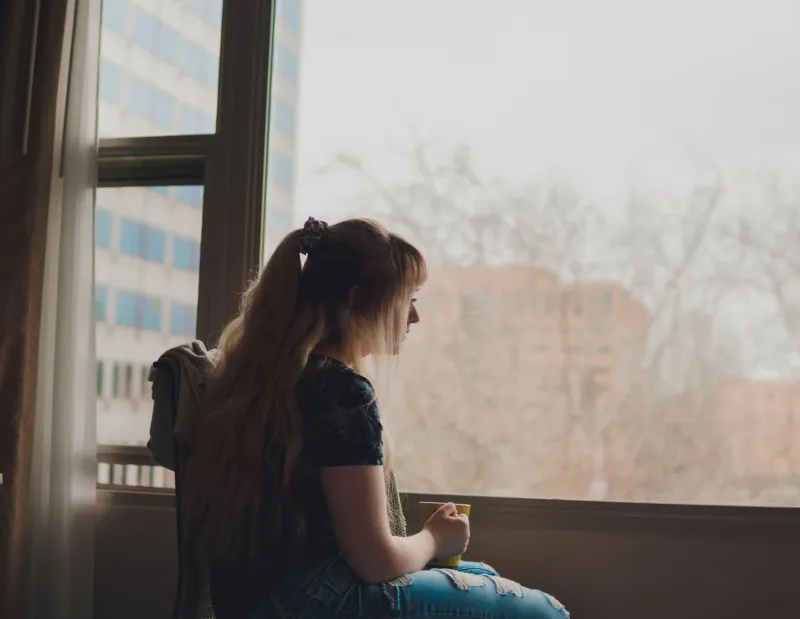
Somewhere between the last nursing session and the first morning you wake up and realize your body is entirely your own again, something quietly breaks open. Not in a dramatic way. More like the way a house settles — a creak here, a shift there — and suddenly nothing feels quite like it fits the way it used to.
Weaning gets talked about a lot in terms of logistics. When to do it, how to do it gradually, what to expect from your supply. What doesn't get talked about nearly enough is what happens to you — your sense of self, your role, your identity — when breastfeeding ends.
For many mothers, nursing was never just feeding. It was the thing that made them feel irreplaceable. Competent. Connected. And when it's gone, the silence that follows can be genuinely disorienting.
You Built an Identity Around Something That Had an Expiration Date
Here's the thing about breastfeeding: it's immersive by design. In those early weeks, it demands almost everything from you — your time, your body, your attention, your sleep, your wardrobe choices, what you eat and drink, how you plan your day. Your entire life reorganizes itself around this one function.
And most of us, whether we realize it or not, start to build our self-concept around it.
You become the mom who breastfeeds. Maybe you joined a nursing group, followed lactation accounts, researched pumping schedules at midnight. Your identity as a nurturing, capable, physically present mother became deeply intertwined with the act of nursing itself. That's not a weakness. That's just what happens when something takes up that much real estate in your life.
So when it ends — whether it ends on your terms, your baby's terms, or somewhere in the messy middle — that identity doesn't automatically dissolve and reform into something new. It just... leaves a gap.
The Void Is Real (and It's Not the Same as Guilt)
A lot of the conversation around weaning focuses on guilt: guilt for stopping too soon, guilt for going too long, guilt for feeling relieved. But identity loss is different from guilt, and conflating the two means a lot of women don't even have language for what they're actually experiencing.
Guilt is "I should have done this differently."
Identity loss is "I don't know who I am now that this is over."
They can exist at the same time, but they're not the same wound. The identity void that follows weaning can look like low-grade restlessness, a sense of purposelessness even when you're objectively busy, or a strange grief that doesn't have a clean object. You're not mourning your baby — they're right there. You're mourning a version of yourself that you didn't realize you'd grown so attached to.
This is especially acute for mothers who breastfed through significant challenges. If you fought hard for your supply, worked with a lactation consultant, powered through mastitis or latch issues or pumping at work — nursing was something you earned. It was proof of something. Letting it go can feel like losing that proof.
Your Relationship with Your Body Just Changed (Again)
Breastfeeding is one of the most physically intimate things a human body can do. For months or years, your body has been in constant communication with your baby's needs — responding to hunger cues, regulating hormones, producing exactly what your child required. That's not nothing. That's a profound biological relationship.
When it ends, your body goes through real hormonal shifts — drops in prolactin and oxytocin that can affect mood, sleep, and emotional regulation. Some women describe feeling flat or disconnected in the weeks after weaning, and there's actual physiology behind that.
But beyond the hormones, there's also just the strangeness of inhabiting a body that used to have a very clear job and now doesn't. Getting reacquainted with your physical self outside of the nursing role is its own process, and it's okay if it takes time.
Practical Ways to Rebuild (Without Forcing It)
Here's what actually helps — not in a "treat yourself" way, but in a genuine, intentional way:
Name what you've lost. Before you can rebuild, you have to be honest about what you're grieving. Was it the closeness? The sense of purpose? The community? The feeling of being needed in a very specific, irreplaceable way? Getting specific about the loss makes it easier to figure out what you're actually looking for next.
Revisit the things that existed before. Not because you need to "get back to who you were before baby" — that person is gone, and that's okay — but because there are probably interests, friendships, and parts of yourself that got quietly shelved during the nursing years. A book club. A creative hobby. A friendship that faded. A physical activity you used to love. These aren't distractions. They're threads back to a fuller sense of self.
Redefine what being a good mother looks like now. So much of maternal identity gets built around the visible, physical acts of caregiving — and breastfeeding is one of the most visible of all. When it ends, it's worth asking yourself: what does nurturing my child look like at this stage? The answer will be different, but it won't be less. It'll just require a new vocabulary.
Talk to someone who gets it. Whether that's a therapist, a postpartum support group, or a close friend who's been through it — don't try to process this in isolation. The cultural narrative around weaning tends to be either celebratory ("you're free!") or mournful, and neither of those fully captures the complexity of what you might be feeling.
Give yourself a real timeline. The identity reconstruction that happens after a major life transition doesn't happen in a week. Be genuinely patient with yourself. The unsettled feeling isn't a sign that something is wrong with you. It's a sign that something significant happened, and your sense of self is catching up.
You Are More Than What You Fed Your Baby
Nurturing a child is enormous. But you were a full human being before your baby was born, and you remain one now that the nursing chapter has closed. The woman who showed up for every feeding, who made it work or made peace with it not working, who carried all of that in her body and her heart — she doesn't disappear when the milk dries up.
She gets to figure out what comes next.
And that process, as uncomfortable as it is, is its own kind of becoming. You don't have to have it figured out right away. You just have to be willing to stay curious about who you are now — and give yourself the grace to find out.