I Love My Baby But I Hate Being Touched: The Feeling No One Talks About

Photo by Photo by Annie Spratt on Unsplash on Unsplash
The Feeling You're Afraid to Admit
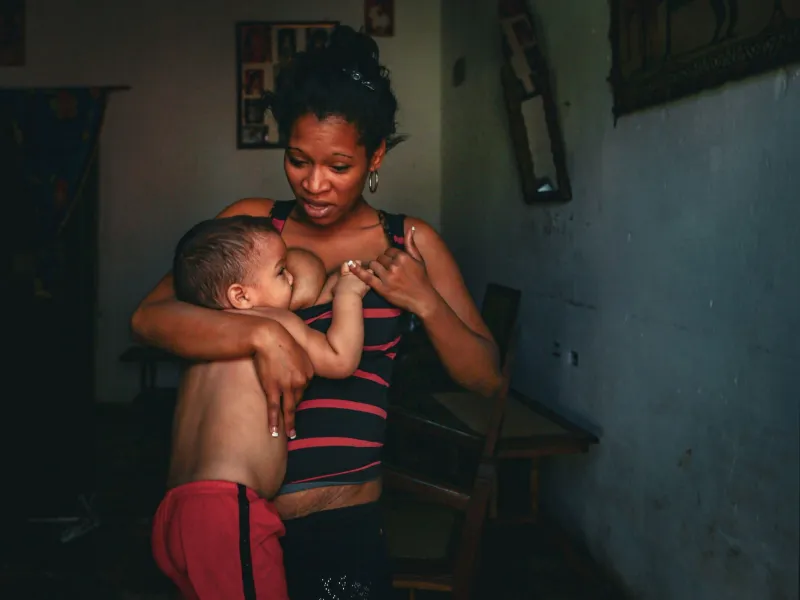
It usually shows up quietly at first. A low-grade irritation when the baby roots for the breast again. A flinch when your partner reaches for your hand after a long day of nursing. A desperate, almost primal need for your body to just be yours for five minutes.
And then comes the guilt, fast and heavy: What kind of mother feels this way?
The answer is: a lot of them. More than most people talk about. The experience of touch aversion — sometimes called being "touched out" — is one of the most common and least discussed aspects of the postpartum period, and it hits nursing moms particularly hard.
What "Touched Out" Actually Means
Being touched out isn't a character flaw or a sign that you bonded poorly with your baby. It's a physiological and psychological response to sustained, high-demand physical contact — and breastfeeding is one of the most physically demanding forms of intimacy a human body can experience.
For many mothers, nursing involves hours of skin-to-skin contact every single day. Your body is being used as both a food source and a comfort object, often simultaneously, often around the clock. That's an enormous amount of sensory input. When your nervous system reaches its threshold, it starts sending distress signals — irritability, hypersensitivity to touch, a desperate need for physical space.
Some mothers experience something even more specific: a condition sometimes called dysphoric milk ejection reflex (D-MER) or, separately, nursing aversion or breastfeeding agitation. These aren't the same thing, but they can overlap in confusing ways.
The Biology Behind the Overwhelm
Here's something worth understanding: your hormones are doing a lot of work here, and not always in the direction you'd expect.
Oxytocin — the so-called "bonding hormone" — is released during breastfeeding and is generally associated with warmth and connection. But oxytocin also suppresses estrogen, and low estrogen levels can contribute to emotional dysregulation, vaginal dryness, and a reduced desire for physical contact. The same hormone that's supposed to make nursing feel tender can, in certain hormonal environments, set off a cascade that leaves you feeling hollow or overstimulated instead.
Prolactin, which drives milk production, also plays a role. High prolactin levels are linked to reduced libido and can affect your overall sensory tolerance. Your body is essentially in a biological state that prioritizes baby-feeding over almost everything else — including your own comfort.
Add to this the sleep deprivation, the physical recovery from childbirth, and the identity shift of new parenthood, and it's not at all surprising that some mothers hit a wall.
When Breastfeeding Stops Feeling Like Bonding
There's a cultural script around nursing that's almost universally soft-lit: a serene mother gazing at her baby, skin warm, the world quiet. And sometimes it really does feel like that. But sometimes it feels like being slowly eaten alive, and nobody puts that on a greeting card.
Nursing aversion — a term used to describe negative emotions or physical sensations specifically during breastfeeding — is estimated to affect a significant portion of nursing mothers, though exact numbers are hard to pin down because so few women report it. Symptoms can include:
- Skin crawling or a strong urge to pull away during latch
- Intense irritability or anger that appears suddenly during a feeding
- Intrusive thoughts about stopping nursing immediately
- Emotional numbness or detachment during sessions that previously felt connecting
- A sense of resentment toward the baby, followed by immediate shame
If any of that sounds familiar, please hear this: you are not broken. Your body is communicating something real, and it deserves to be taken seriously.
You're Allowed to Have a Body That's Yours
One of the hardest things about the postpartum period in American culture is how thoroughly a mother's body gets reframed as a resource. It fed a baby for nine months. It delivered that baby. Now it's feeding them again. The expectation, often unspoken, is that this is simply what bodies do — and that a good mother does it gratefully.
But you are a person with a nervous system, not just a vessel. Your need for physical autonomy doesn't disappear when you become a parent. Acknowledging that need isn't selfish — it's honest, and honesty is actually what keeps you in this for the long haul.
Practical Ways to Find Relief
You don't necessarily have to stop breastfeeding to reclaim some sense of physical comfort. Here are some approaches that have helped other mothers navigate this:
Set a mental timer. Knowing that a feeding will end — and giving yourself permission to disengage afterward — can make the sensation more manageable. Tell yourself: I can do this for ten more minutes, and then I'm going to sit alone for five.
Create sensory anchors. Some mothers find it helpful to focus on a specific, pleasant sensory input during feedings — a particular scent, a textured object they hold, a favorite playlist. It's a way of grounding your nervous system in something you chose.
Communicate with your partner. If touch aversion is spilling over into your relationship, name it. "I've been so touched out by nursing that I don't have anything left for physical affection right now" is a complete and valid sentence. Your partner deserves to understand what's happening.
Consider reducing feeding frequency gradually. If you're exclusively nursing, introducing pumped bottles for some sessions can give your body literal breaks from contact without stopping breastfeeding entirely.
Talk to someone who gets it. A therapist familiar with perinatal mental health, or a lactation consultant who takes maternal wellbeing seriously, can help you work through both the emotional and practical dimensions of this. You don't have to white-knuckle through it alone.
This Doesn't Make You a Bad Mom
The mothers who show up in online forums whispering "is it normal to dread nursing?" are not bad mothers. They're mothers who care enough to keep going even when it's hard, who are asking questions instead of just suffering quietly.
Your breastfeeding journey is allowed to include days when it feels like too much. It's allowed to include ambivalence, and frustration, and a need for your own skin back. None of that erases the love. It just means you're human, doing a very demanding thing, in a body that has limits.
Honoring those limits isn't giving up. It's how you stay.